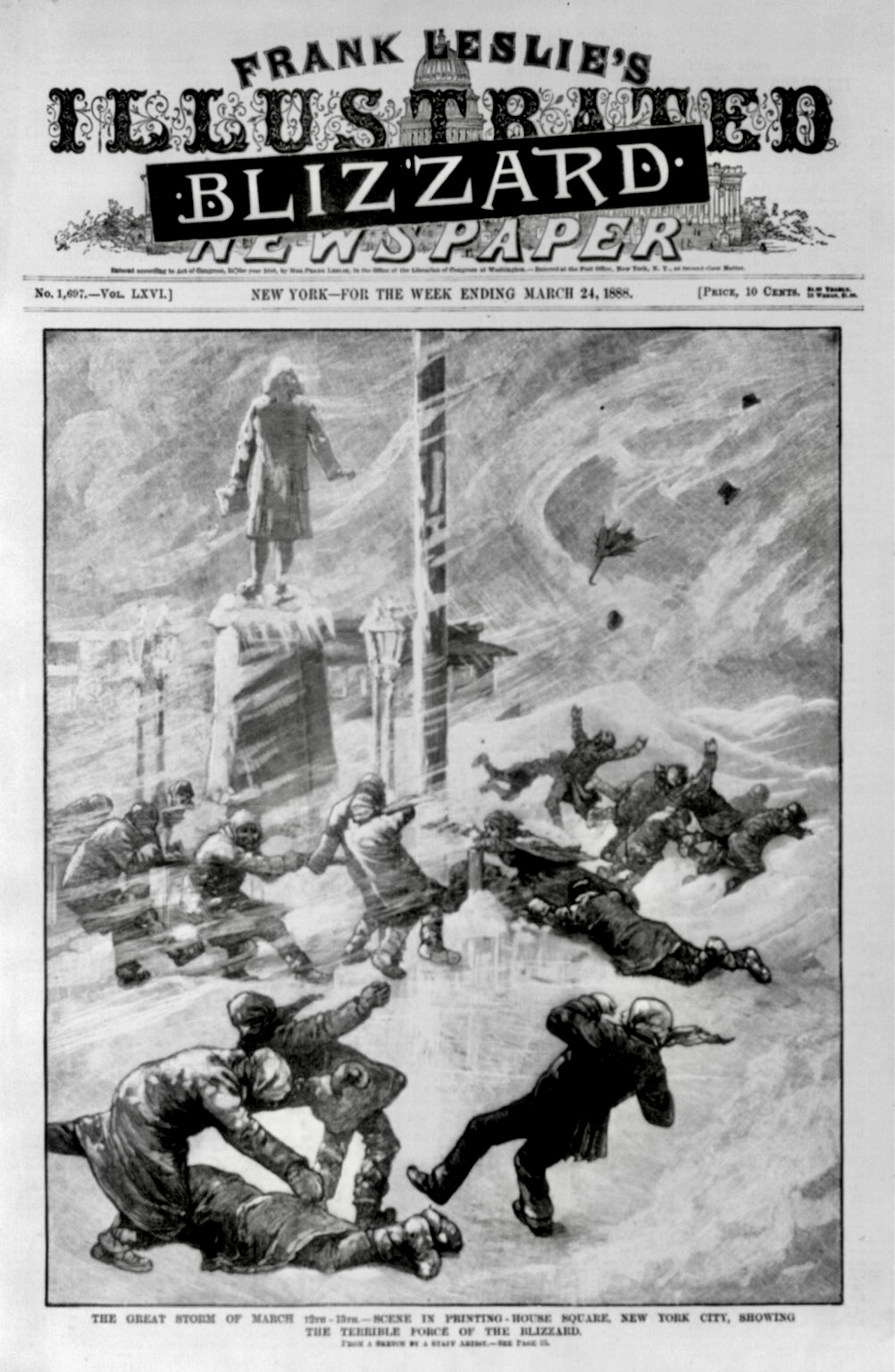
“Blizzard” Etymology
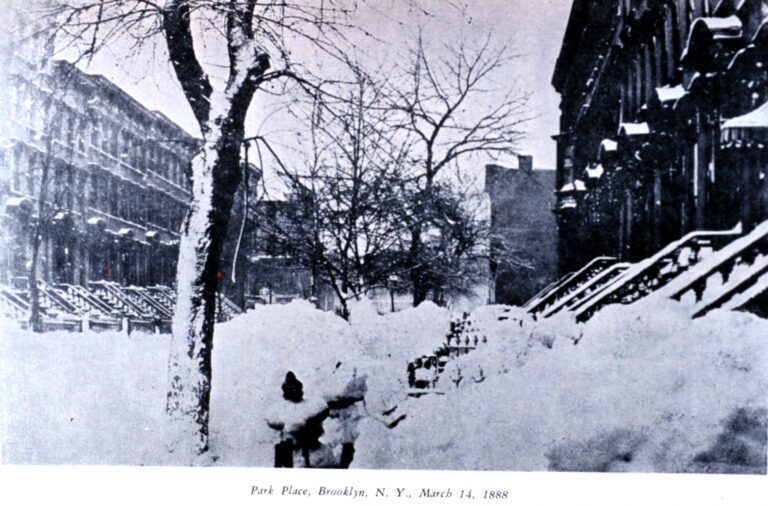
When New York City was paralyzed by the great Blizzard of 1888, “blizzard” was a recent addition to the American lexicon, and one virtually unknown in the East.
It is a curious word, one without an identifiable Latinate root, for sure. It does have what poet Robert Frost once described as the “sound of sense,” akin to a word that Lewis Carroll or Charles Dickens might mint to describe what their characters witnessed, although it is unlikely that either of those Londoners ever experienced a blizzard. In its onomatopoeic sense, it is similar to blow or blast.
H. L. Mencken reported a “single use of it” in the Oxford Dictionary in 1825, and lexicographer Allen Walker Read said it was used to denote a “violent blow” before it became associated with snowstorms.
Read dated the earliest use of the term in the United States to 1870, when it appeared in an issue of an Iowa newspaper on at least three occasions. The phrase evidently gained popularity quickly. In the minutes of a baseball club meeting in Estherville, Iowa, that same year, the team decided on the name “Northern Blizzards,” professing a “certain liking for it because it is at once startling, curious, and peculiarly suggestive of the furious and all victorious tempests which are experienced in this northwestern clime.”
Today, the term is more technical than poetical.
By NOAA’s definition, to qualify as a blizzard, “the following conditions are expected to prevail for a period of three hours … sustained wind or frequent gusts of 35 mph or greater, and considerable falling and/or blowing snow, reducing visibility frequently to less than a quarter mile.”
That’s a lot to ask of a storm.
The definition does imply some interpretive wiggle room.
I drove through the peak of Philadelphia’s Jan. 7-8, 1996 record snowstorm, which did not meet the official criteria, which was, and remains, hard to believe.