A Hayfever Explorer
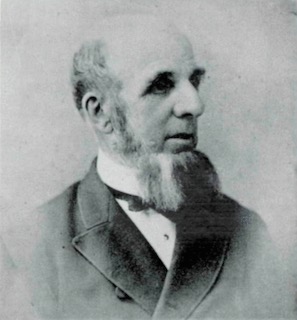
It was a serendipitous encounter with road dust that led to the one of the most significant insights in the history of pollen–allergy research.
Here is the remarkable personal account of Charles Harrison Blackley from his book, Hayfever: Its Causes, Treatment, and Effective Prevention, published in 1890.
I had several times noticed that dust could at certain times of the year produce some of the milder and less–marked symptoms of hay–fever, but there was this peculiarity about these attacks, that generally they came on only during the time that hay–fever prevailed (and then as exacerbations) or immediately after the hay season was over, but rarely, if ever, during winter or early spring.
There was also another peculiarity which these attacks had, namely, that they were more fitful and more ephemeral, coming and going in a more irregular and transitory manner than the ordinary attacks of the disease ever do when they have once set in. At first I was considerably puzzled, and was unable to account for the fitful appearance and departure of the symptoms. I also noticed that the attacks were more frequent whenever I had to pass through any dusty lane in the country, when the hay had been recently all gathered in. I was consequently inclined to think … and others have since thought, that common dust was one of the causes of the disorder.
In one of the earlier years of my attacks, before I had made up my mind to follow out a systematic course of observations on the subject, and when I was just getting free from the disease (about the middle of July), I was out in the country and had to walk through a lane which was apparently not often used for the passage of vehicles. A carriage which passed me at a rapid rate raised a cloud of dust in which I was, for a time, completely enveloped and compelled to inhale pretty freely before I could get out of it. A very violent attack of sneezing immediately came on, and continued at intervals for about an hour. As I bad to pass over the same road on the following day, I determined to see if the same result would follow by disturbing the dust voluntarily. I found that I could bring on the symptoms in this way to the fullest degree of severity.
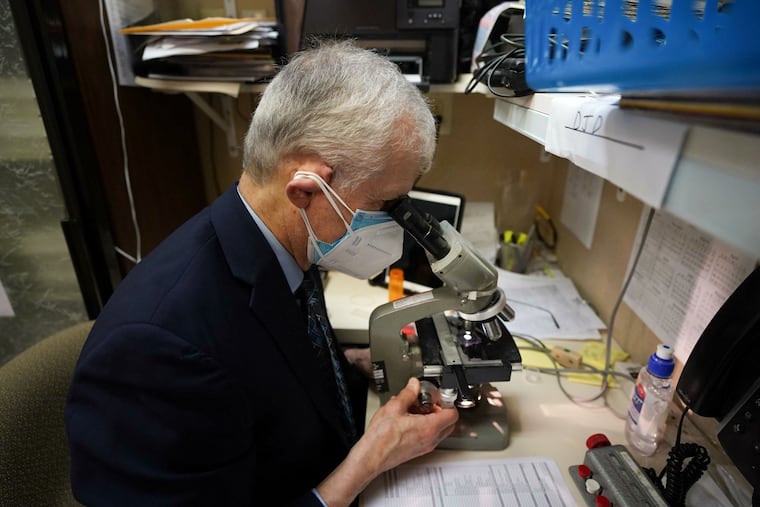
The first examination of the dust under the microscope, made with that which had been scraped from the road and examined in its dry state, did not show anything very special. A second examination of the upper layer of dust mixed with glycerin was more successful, and revealed to me the presence of bodies which I now easily recognize as the pollen grains of the grasses,
So far as I can now recollect, the weather during this season had been very tavourable for the rapid growth and flowering of grass — first a few hours of rain, then a day of sunshine–and when this got to be nearly ready for cutting, and before the period of flowering was gone by, the weather had settled down so as to give three or four weeks without any rain.
With the help of subsequent experience, it is not difficult to see why such a season as I have described should have given rise to a condition of things which would quite account for the symptoms from which I suffered.