The Triumph of the Ragweed
In the annals of war, New York City vs. ragweed ranks among the most one-sided.
Being a Philadelphian, I have to admit I would have rooted for New York in its battle with one of my least-favorite allergenic offenders, the ragweed. And I would have been profoundly disappointed.
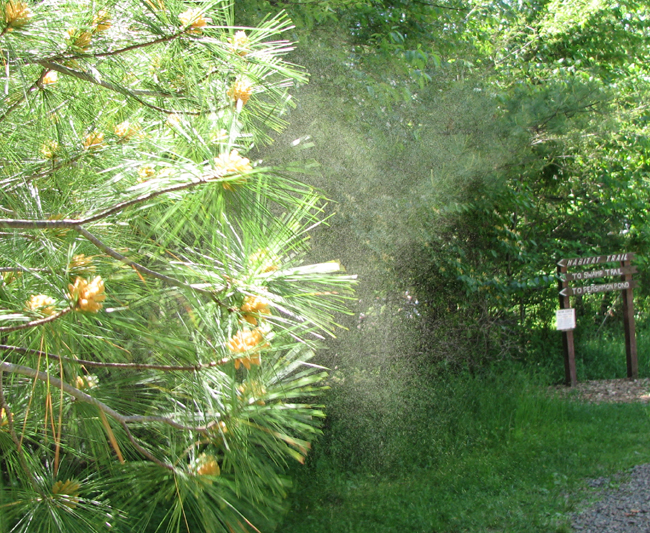
It’s hard to know what they see in each other, but annually ragweed plants undertake a prodigious reproductive festival. A single plant can emit a billion gametes, and millions of us get caught in the crossfire of those airborne pollen grains. Our bodies react with rounds of sneezing and eye-itching, along with mental hazes that only the sufferers could appreciate.
At the end of World War II, decades into a swelling wave of pollen-allergy cases in New York and all over the nation, the city declared war on the offending ambrosians. The battle raged on for nine years. But unlike in the horror movies – think Invasion of the Body Snatchers, Day of the Triffids – it was the plant life that prevailed in Gotham, despite an all-out assault that cost about $12 million in today’s dollars
‘Operation Ragweed’
The battle began right after World War II, decades into a wave of pollen-allergy cases that had been building in New York and all over the country. No one has yet figured out why so many people had developed allergic reactions to the plant’s pollen, only that more and more human beings were sneezing and rubbing their eyes in late August and September.
In 1946, with the United States still basking in its global combat victories, the New York City Department of Health decided that too much was enough and commenced “Operation Ragweed.” In advance of the sneezing season, street-flushing trucks sprayed areas where weed growth was evident with the herbicide 2-4D (allegedly harmless to humans).
It did not go well.
During the first four years, the ragweed acreage actually did decline. However, no further progress was reported in the subsequent five years. What’s more, or less, during the nine years of the program, the actual pollen counts showed “no consistent decline,” according to the Health Department’s post-mortem.
After the 1954 season, the city unceremoniously decided to cry “uncle.” Perhaps the New Yorkers should have known that ragweed’s victory would be resounding.
That post mortem noted that a three-year eradication effort in Chicago in the 1930s was “completely ineffective.”
Why the war was lost
Even if New York had eliminated all its ragweed plants, it would have reduced pollen concentrations by no more than half: By the department’s calculation, in any given season about 50 percent of the pollen would have been wind-borne from areas outside the city.
The Health Department suggested that it would take a continent-wide campaign to end the scourge of ragweed in North America.
These days, somehow that doesn’t seem likely to happen.
Ragweed has been left to continue its tormenting ways. And the ranks of its victims keep on swelling for reasons that remain elusive.
One possible explanation is the “hygiene hypothesis” offered by a British researcher in 1989. It holds that having spent so much of their lives in natural environments, country folk developed an immunity that was lost on those living in urban environments. Like New York City, for example.
Whatever the explanation, if you’re allergic to ragweed, you’re contending with a formidable enemy.
Ask the New York City health department.